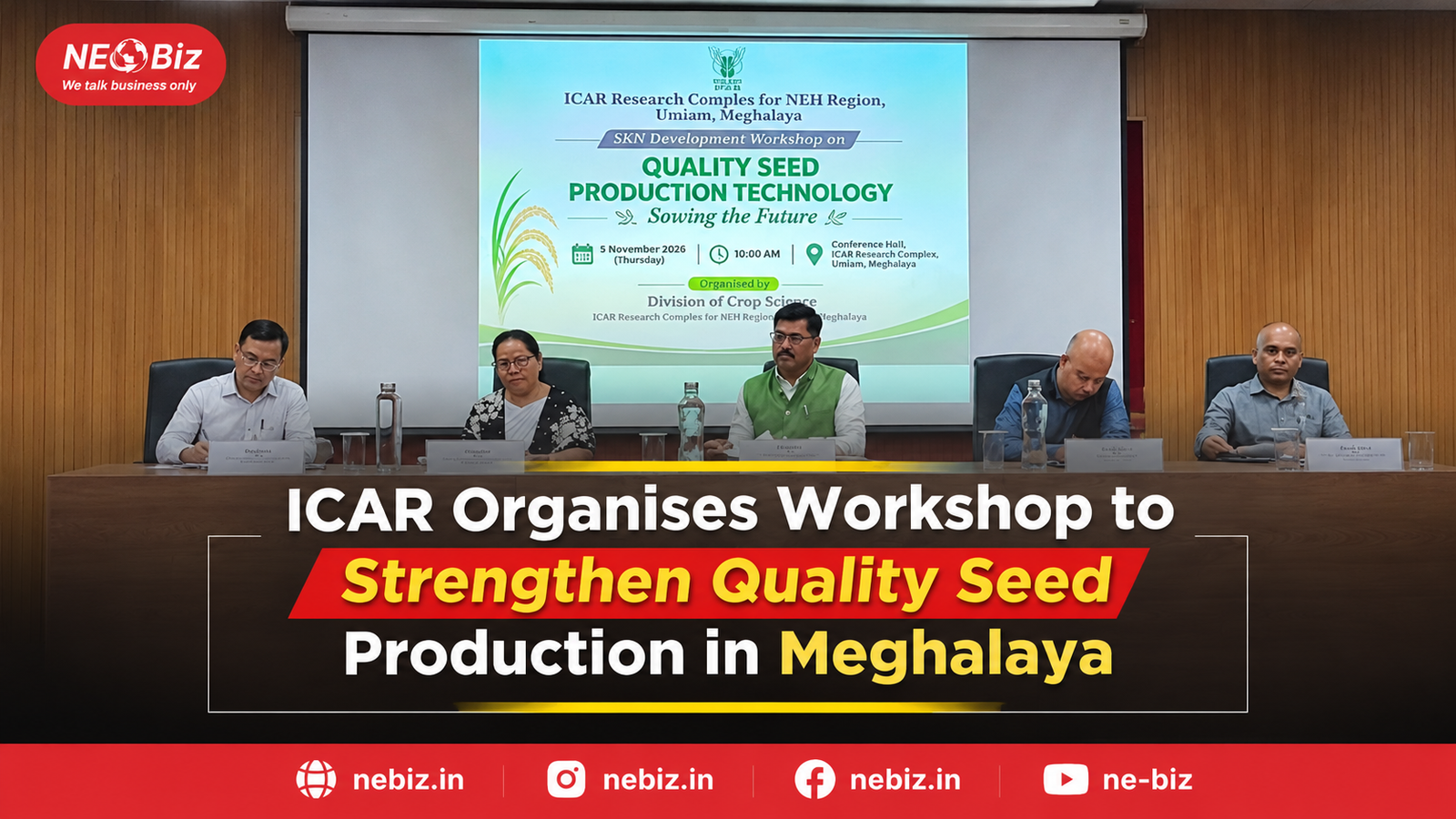
The Indian Council of Agricultural Research (ICAR) Research Complex for the North Eastern Hill (NEH) Region, Umiam, Meghalaya, organised a skill development workshop on “Quality Seed Production Technology: Sowing the Future” to strengthen agricultural practices and promote scientific approaches to seed production in the region. The workshop brought together agricultural scientists, government officials, farmers, researchers and other stakeholders to discuss the importance of quality seeds in improving crop productivity and ensuring sustainable agricultural development.
The programme focused on enhancing farmers’ technical knowledge and encouraging the adoption of improved seed production technologies. Quality seeds are considered a fundamental input in agriculture, as they directly influence crop growth, yield potential, resistance to diseases and overall farm productivity. By promoting scientific seed production practices, the initiative aims to improve the availability of reliable planting materials and strengthen the agricultural ecosystem across Meghalaya and the wider Northeast.
The workshop also highlighted the importance of strengthening the seed production system through improved cultivation techniques, better seed selection, scientific harvesting methods and appropriate storage practices. Ensuring the availability of high-quality seeds can help farmers reduce production risks, improve crop performance and achieve better returns from their agricultural activities. Such initiatives are particularly important in the Northeast, where agriculture remains a major source of livelihood for a significant portion of the population.
Meghalaya has considerable agricultural potential, with farming communities engaged in the cultivation of a wide range of crops suited to the region’s diverse climatic and geographical conditions. However, access to quality seeds, modern agricultural technologies and efficient market linkages continues to be an important factor in improving productivity and farmers’ income. Workshops and capacity-building programmes organised by ICAR can help bridge knowledge gaps by connecting farmers with agricultural experts and research-based solutions.
The workshop further recommended the listing of ICAR-released crop varieties on the SATHI portal to facilitate their wider recognition and dissemination. Participants also proposed preparing a list of high-yielding and regionally suitable crop varieties for submission to the Meghalaya government, enabling large-scale seed multiplication under various government missions. Identifying suitable areas for cultivating soybean, millets and other crops through registered seed growers, state farms, Farmer Producer Organisations (FPOs) and progressive farmers was also emphasised.
In addition, the need to promote scientific seed storage and processing technologies suited to Meghalaya’s agro-climatic conditions was highlighted. Participants called for the establishment of processing and value-addition facilities for crops such as soybean and perilla to encourage large-scale cultivation, strengthen market linkages and enhance farmers’ earnings. Such infrastructure could help reduce post-harvest losses while enabling farmers to explore new markets and diversify their agricultural activities.
The workshop served as an important platform for knowledge exchange and collaboration among research institutions, government departments, agricultural extension agencies and farming communities. The discussions highlighted the need for coordinated efforts to strengthen seed production and distribution systems, promote regionally adapted crop varieties and improve access to scientific agricultural practices.
The initiative reflects ICAR’s continued efforts to support agricultural development in Meghalaya through research, training and technology dissemination. Strengthening quality seed production is expected to contribute to improved crop productivity, food security, sustainable farming practices and better livelihood opportunities for farmers across the state. By connecting scientific research with practical farming requirements, the workshop aims to support a more productive, resilient and economically sustainable agricultural sector in Meghalaya and the wider Northeast region.