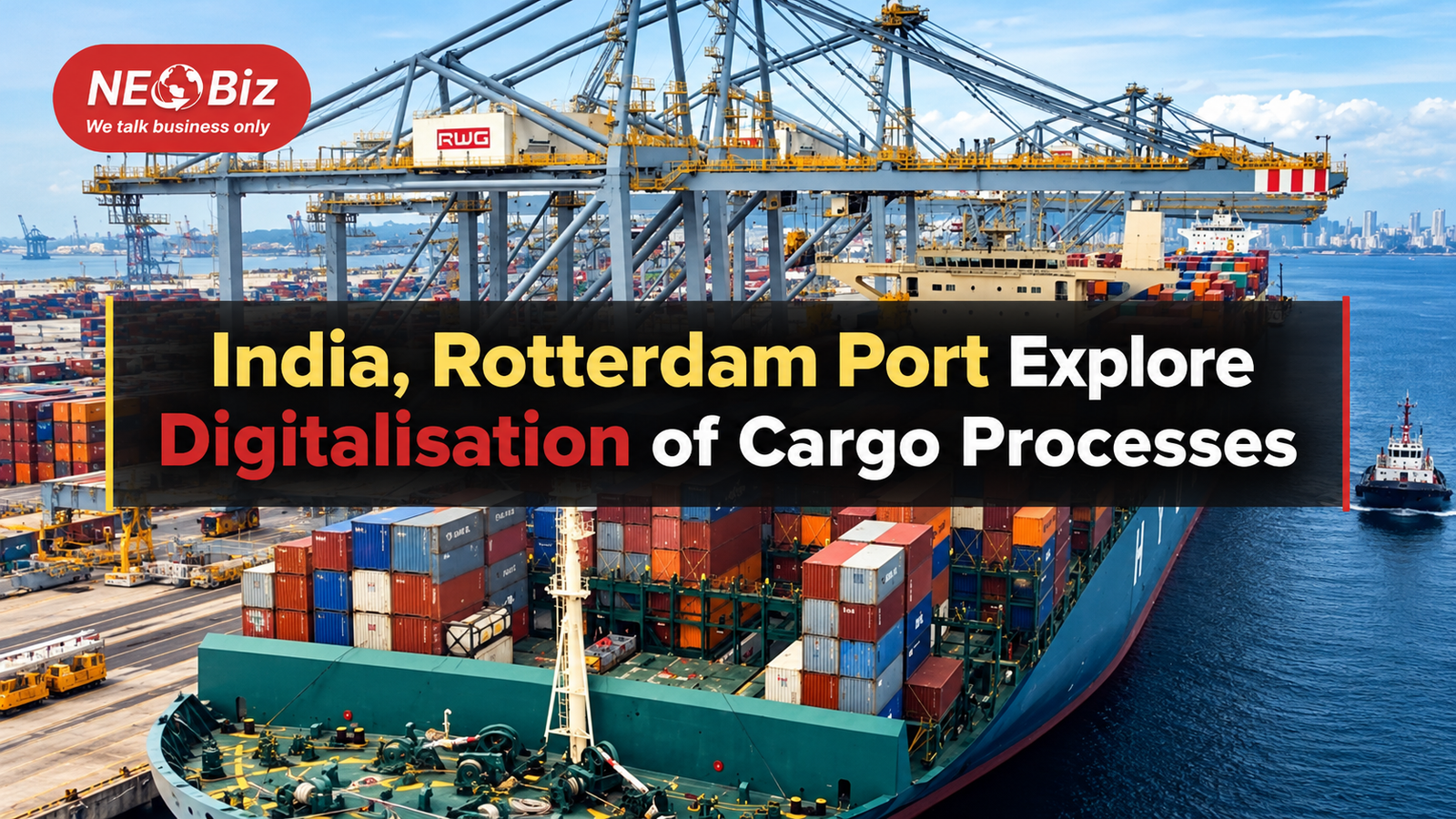
India and the Port of Rotterdam in the Netherlands are exploring ways to digitalise cargo processes to improve port efficiency, streamline logistics operations and facilitate international trade. The development was highlighted by Union Commerce and Industry Minister Piyush Goyal following discussions with representatives of the Port of Rotterdam, one of Europe's most important maritime and logistics hubs.
The proposed engagement focuses on improving the efficiency of cargo movement through digital systems and streamlined procedures. More efficient cargo processing could help reduce administrative delays, improve coordination between stakeholders and support faster movement of goods through ports. Such measures are increasingly important as India seeks to strengthen its position in global supply chains and improve the competitiveness of its exporters.
The Port of Rotterdam serves as a major gateway for goods entering and leaving European markets. Its extensive shipping connections, cargo-handling infrastructure and logistics network make it an important international trade hub. Cooperation with Rotterdam could provide opportunities for India to explore approaches to port management, digital documentation and cargo coordination that support more efficient maritime operations.
For Indian businesses, improvements in cargo processing could have implications across several sectors, including manufacturing, agriculture, engineering, textiles, chemicals and other export-oriented industries. Delays in shipping and documentation can increase logistics costs and affect delivery schedules. Digitalisation could help businesses manage these processes more efficiently, improve shipment visibility and strengthen coordination between exporters, shipping companies, customs authorities and logistics providers.
The initiative also comes amid India's broader efforts to modernise its maritime infrastructure and improve logistics performance. As international trade volumes grow, ports need to handle larger quantities of cargo while maintaining efficiency, reliability and cost competitiveness. Alongside investment in physical infrastructure, the adoption of digital systems can help improve the utilisation of existing port facilities.
India has been expanding its port capacity over the past decade and continues to focus on improving maritime connectivity. Further growth in cargo-handling capacity, combined with streamlined procedures and technology-enabled operations, could support the country's manufacturing and export ambitions. Efficient ports are particularly important for industries that depend on timely access to imported raw materials and reliable delivery of finished products to international markets.
The discussions with Rotterdam also highlight the importance of international cooperation in developing more integrated logistics networks. Collaboration between ports can help identify operational practices and technological solutions that improve information exchange, cargo planning and supply-chain coordination. However, the specific systems to be adopted, the implementation timeline and the agencies involved in any proposed arrangements will depend on further discussions and formal decisions.
The engagement could also be relevant to India's growing trade relationship with European markets. More efficient maritime logistics can complement trade facilitation measures by helping businesses move products across borders with fewer procedural bottlenecks. For exporters, predictable shipping schedules and effective cargo management can be important factors in meeting international orders and maintaining competitiveness.
For India, the potential benefits extend beyond port operations. More efficient logistics can support industrial activity, improve supply-chain resilience and create opportunities for businesses involved in freight forwarding, warehousing, shipping technology and transportation services. The impact will depend on how discussions translate into practical measures and whether improvements are implemented across the relevant logistics and customs processes.
The India–Rotterdam engagement reflects a broader focus on using technology to strengthen trade infrastructure and improve the movement of goods. As India continues to expand its role in international commerce, digitalisation and cooperation with established global logistics hubs could become important elements of its efforts to improve port efficiency and strengthen supply-chain connectivity.