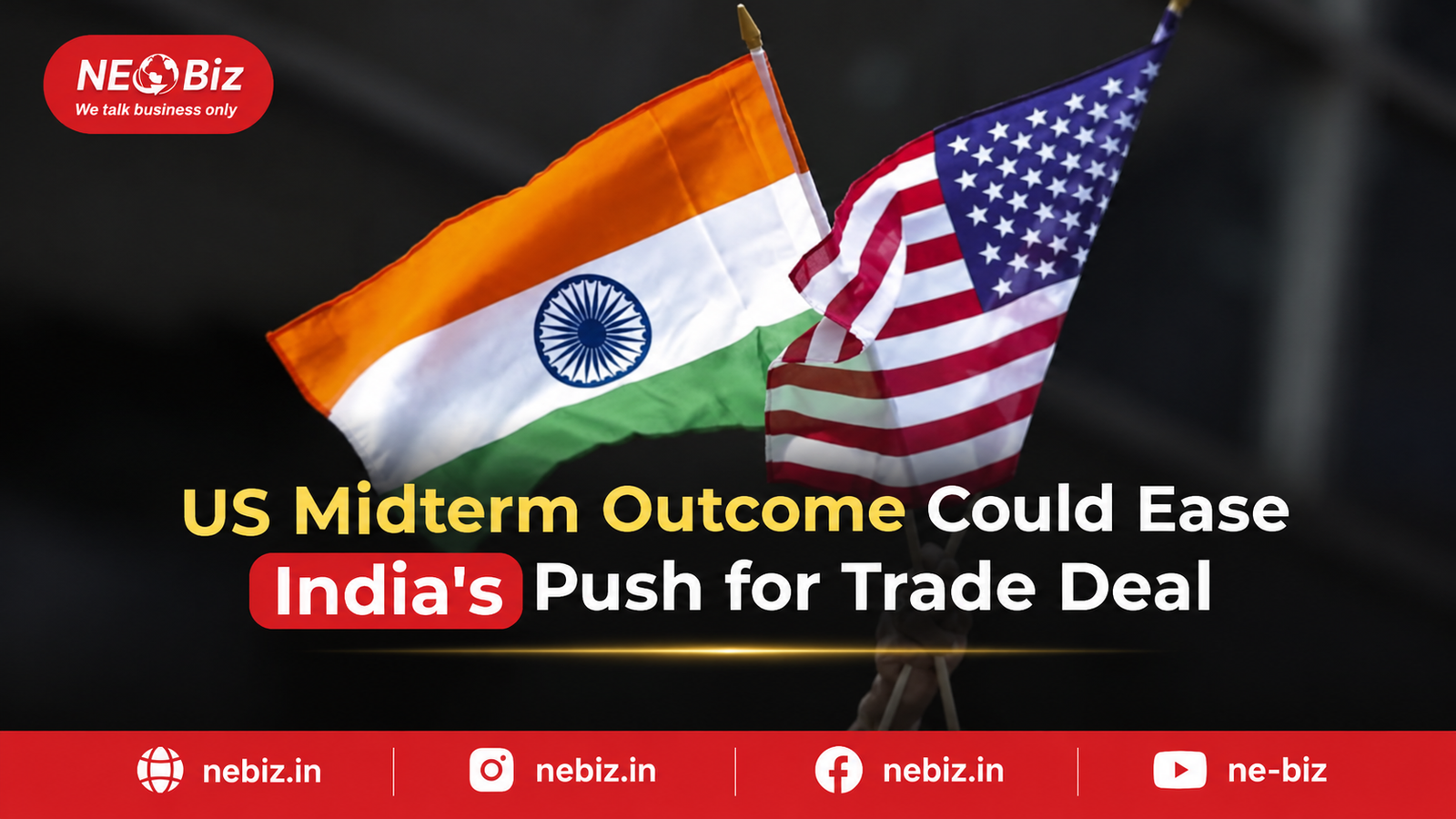
New Delhi, November 5: The outcome of the United States midterm elections, which ended unified Republican control of Congress, could reduce the urgency for India to conclude a trade deal with Washington, according to a report by Emkay Global Financial Services Ltd. The assessment suggests that the changing political landscape in the US may provide India with greater flexibility in its trade negotiations while reducing the risk of sudden tariff escalations.
The report noted that the previously discussed 18 per cent US tariff framework rate was never implemented, while Indian goods currently face a lower 10 per cent Section 301 duty. It also highlighted the loss of the US administration's leverage under the International Emergency Economic Powers Act (IEEPA), which could alter the dynamics of bilateral trade discussions.
According to the report, the midterm election outcome may not substantially change the existing tariff structure immediately, but it could influence the incentives of US President Donald Trump. With a changed balance of power in Congress, the administration may face greater pressure to focus on consumer affordability and pursue trade agreements before the 2028 presidential election.
The report suggested that future tariff escalations may increasingly require investigation-based action under Section 301 and Section 232 of US trade law. These procedures could make the introduction of new tariffs slower and more structured, potentially reducing the risk of unexpected trade disruptions for India.
However, the report cautioned that trade-related uncertainty is unlikely to disappear entirely. Trade remains an area where the US President retains considerable executive authority, meaning that policy announcements and developments could continue to influence global markets.
Sector-specific tariffs under Section 232, particularly those affecting pharmaceuticals and electronics, remain important risks for Indian exporters. Any setback in diplomatic relations involving Russia or Iran could also revive US pressure on India's oil imports.
A reduction in tariff uncertainty could provide a more favourable environment for Indian exporters and businesses engaged in international trade. Greater predictability in trade policy may support investment decisions, improve business confidence and strengthen India's export outlook.
The report also highlighted the combined impact of a softer US dollar and declining crude oil prices on India's broader economic position. Lower crude prices could help reduce the country's import burden, particularly given India's substantial dependence on imported energy.
Brent crude prices had declined by approximately 19 per cent from their October 2026 highs to around $95 per barrel, according to the report. The development is significant for India, where the oil import bill had increased by 24 per cent during the financial year to date, with Brent crude averaging approximately $97 per barrel.
The easing of crude prices and reduced tariff volatility could also support the stability of the Indian rupee and improve the outlook for exports. The report suggested that these factors may gradually reduce India's risk premium, although a sharp improvement in market valuations is not necessarily expected.
The changing global economic environment could provide some breathing space to the Reserve Bank of India (RBI), particularly in managing foreign exchange pressures. A softer dollar and lower crude prices could reduce some of the challenges associated with defending the rupee.
However, the report cautioned that the relief may remain limited. India's ongoing current account funding requirements and the RBI's substantial forward dollar liabilities could restrict the extent of any sustained appreciation in the rupee.
The report also noted that persistent inflation in the US could keep American interest rates elevated, even if the Federal Reserve follows a gradual easing path. This would require the RBI to remain vigilant in managing domestic monetary and currency conditions.
The US midterm election outcome could mark a shift in the negotiating environment for India, providing New Delhi with greater room to assess trade terms without the same degree of urgency. The development may also influence the broader economic relationship between the two countries, which remains important for investment, technology, manufacturing and exports.
While the reduced risk of sudden tariff escalation is viewed as a positive development, India will continue to face challenges related to sectoral trade restrictions, energy imports and geopolitical developments.
The Emkay Global Financial Services report indicates that the evolving political landscape in Washington could create a more favourable environment for India's trade strategy. However, the long-term impact will depend on how both countries manage negotiations, tariff policies and broader economic cooperation in the coming months.