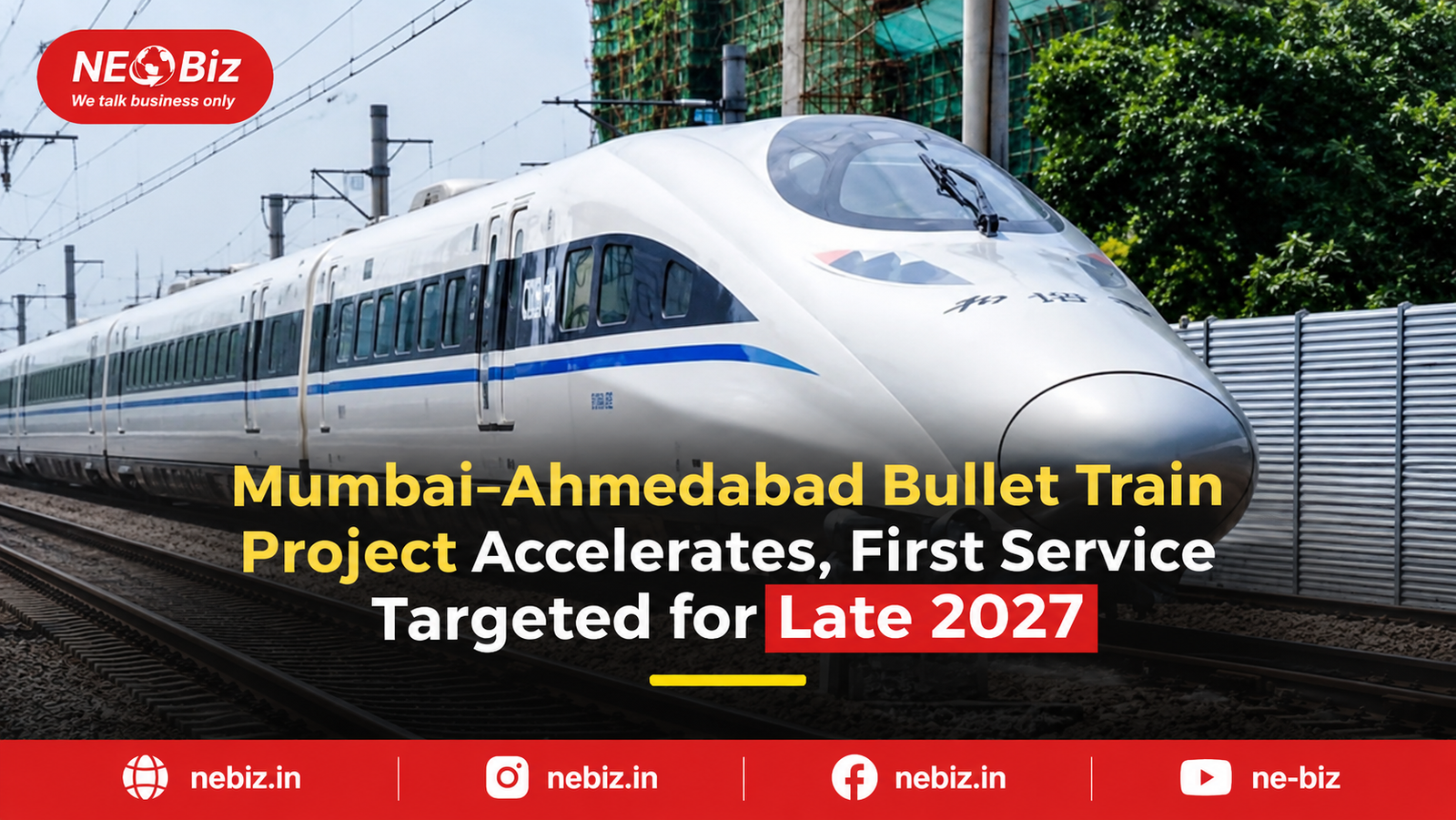
India's first bullet train project, the Mumbai–Ahmedabad High-Speed Rail (MAHSR) corridor, is moving closer to its first operational milestone, with construction and electrification activities advancing across key sections. The 508-kilometre project, being developed with technical and financial assistance from the Government of Japan, is designed to transform intercity travel between Mumbai and Ahmedabad through high-speed rail connectivity. The first passenger service is targeted for late 2027, marking an important step in India's efforts to introduce a new generation of high-speed railway infrastructure.
A major milestone was achieved on November 20, 2026, when the Overhead Equipment (OHE) system on the 50-kilometre Surat–Bilimora section was energised. This is the first section of the corridor to receive power through its overhead traction system. The electrification system uses advanced 2 × 25 kV technology, which will supply power to the high-speed trains. The section includes both up and down lines along an elevated alignment. The milestone represents progress beyond civil construction and towards testing and commissioning activities required before passenger operations can begin.
The electrification network for the corridor includes 14 traction substations positioned along the route. These substations will receive electricity from the grid and supply power to the overhead equipment. A centralised control centre will monitor the electrical network to support safe and reliable operations. With the system energised, railway authorities have also issued public safety advisories, warning people against approaching or carrying out unauthorised activities near the live overhead electrical installations.
The Mumbai–Ahmedabad corridor will pass through Maharashtra, Gujarat and the Union Territory of Dadra and Nagar Haveli. It will connect 12 stations: Mumbai, Thane, Virar, Boisar, Vapi, Bilimora, Surat, Bharuch, Vadodara, Anand, Ahmedabad and Sabarmati. The route has been designed for a maximum operational speed of 320 kilometres per hour, with a design speed of 350 kilometres per hour. Once fully operational, the high-speed connection is expected to significantly reduce travel time between the two major economic centres and improve connectivity across the industrial and commercial regions along the corridor.
Construction progress has also been recorded across several major components of the project. According to information provided by the Ministry of Railways in September 2026, the corridor had achieved 62.16% overall physical progress. Foundation work had been completed along approximately 459.9 kilometres, while piers had been completed across 455.1 kilometres. Viaduct girders had been erected along more than 366 kilometres of the route. These elevated structures form the backbone of the corridor, allowing high-speed trains to operate on a dedicated alignment with minimal interference from existing road and railway traffic.
The Gujarat section has recorded substantial progress, with civil construction at several stations and sections advancing towards completion. The Surat–Vapi stretch has been a major focus of construction activity, with civil works, bridges and track-bed development progressing. Work is also continuing on the Maharashtra section, which includes some of the project's most technically challenging infrastructure. One of the major engineering components is the approximately 21-kilometre tunnel between the BKC area and Shilphata, including an undersea section beneath Thane Creek. The tunnel is expected to provide an important connection through the densely populated Mumbai metropolitan region.
The project also involves the development of specialised railway infrastructure, including stations, maintenance facilities, signalling systems, traction equipment and safety installations. Construction and finishing activities at stations are being undertaken alongside work on depots at locations such as Sabarmati, Surat and Thane. These facilities will be essential for train maintenance, operational management and the overall functioning of the high-speed rail network.
Another important aspect of the project is the development of India's high-speed train manufacturing capabilities. BEML has been entrusted with the design and manufacture of two high-speed trainsets for the corridor, with production taking place in India. The introduction of domestically manufactured trainsets is expected to support the development of local engineering capabilities and strengthen the country's railway manufacturing ecosystem. It also represents an important step towards building expertise in high-speed rail technology, rolling stock production and related systems.
Beyond passenger transportation, the bullet train project is expected to have wider economic implications for the regions connected by the corridor. Improved travel connectivity can support business mobility, tourism, investment and commercial activity between Mumbai, Gujarat's industrial centres and Ahmedabad. Faster connections between major cities may also create opportunities for businesses that depend on efficient movement of employees, professionals and visitors. The stations and surrounding areas could become important points for commercial development, hospitality, retail and supporting services, although the scale of these opportunities will depend on local planning and investment.
The corridor is also significant for India's infrastructure and engineering sectors. Its construction involves large-scale requirements for specialised materials, railway equipment, electrical systems, construction technology and project management. The experience gained through the project could contribute to the development of domestic expertise in high-speed railway infrastructure and support future projects as India explores additional high-speed rail corridors.
The immediate priority, however, remains completing the necessary construction, electrification, testing and safety-related work before passenger services can begin. The energisation of the Surat–Bilimora section is an important milestone, but it does not by itself mean that the section is ready for public operations. Further testing, system integration, certification and commissioning will be required before trains can carry passengers. The first service is targeted for late 2027, while the completion and opening of the entire 508-kilometre corridor will depend on progress across the remaining sections and associated infrastructure.
As work continues, the Mumbai–Ahmedabad High-Speed Rail project is entering a crucial phase in its development. The energisation of the first section demonstrates progress towards operational readiness and brings India's first bullet train corridor closer to its intended launch. Once services begin, the project is expected to introduce a new benchmark for intercity rail travel while creating opportunities for infrastructure development, manufacturing, tourism and economic activity along one of India's important commercial corridors.