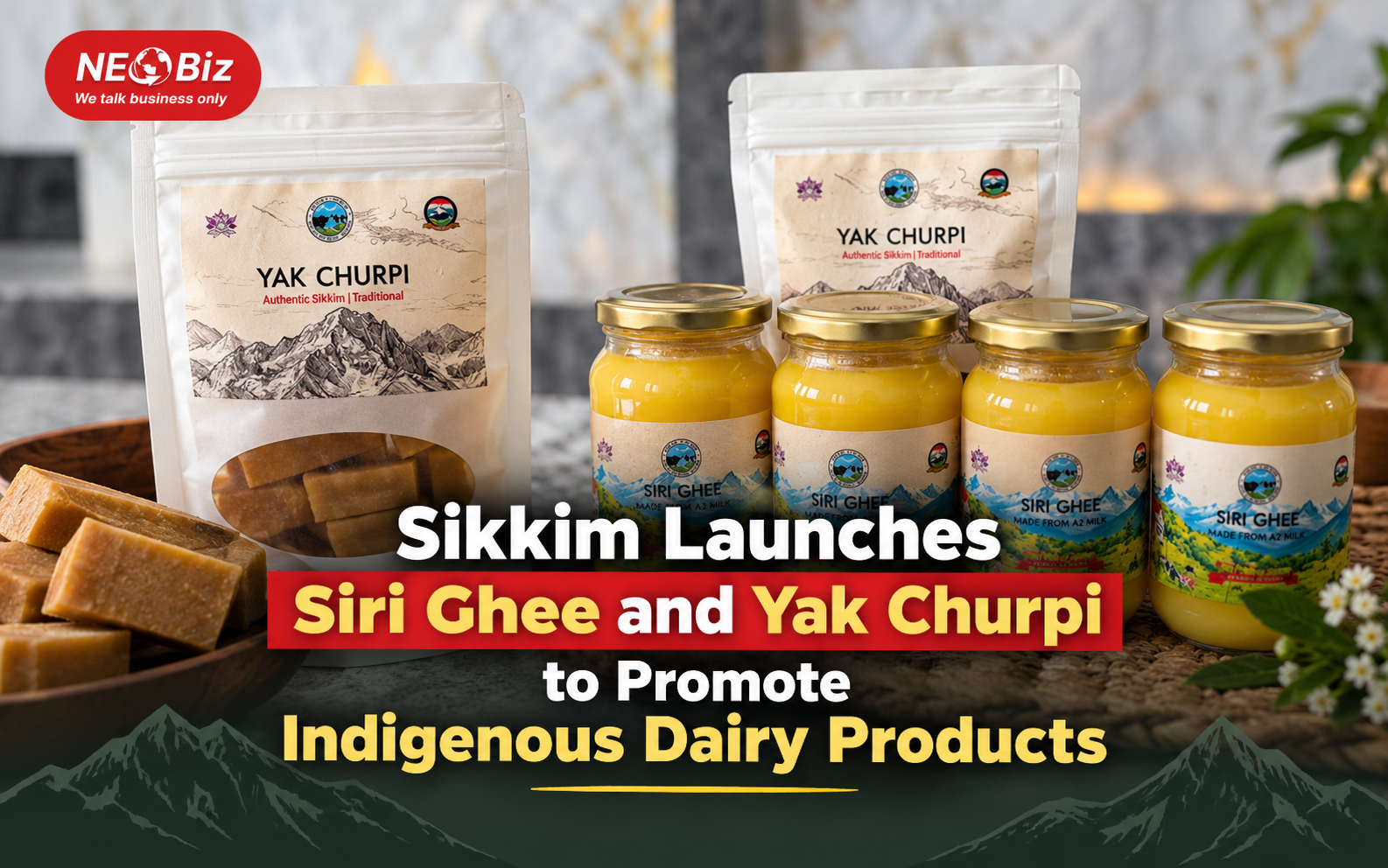
Sikkim is promoting its indigenous livestock products with the launch of Siri Ghee and Yak Churpi, highlighting the commercial potential of traditional dairy production and the role of local farmers and herders in the state’s rural economy. The initiative aims to bring greater attention to regionally produced dairy products and create opportunities to expand their reach in consumer markets. By developing and promoting products rooted in local livestock practices, Sikkim can strengthen the connection between traditional livelihoods and modern food markets.
Siri ghee is a traditional dairy product, while yak churpi is a dairy-based product associated with Himalayan communities. Both reflect the region’s livestock-rearing traditions and local food heritage. Promoting these products can help preserve traditional knowledge while creating opportunities for value addition, processing, packaging and branding. Turning locally produced milk into marketable products can also help producers explore ways to generate income beyond the sale of raw milk.
Yak churpi is particularly associated with high-altitude communities where yak rearing contributes to livelihoods and food systems. Its distinctive character and regional identity can make it attractive to consumers interested in traditional Himalayan foods. With appropriate quality standards, packaging and market positioning, the product could reach customers beyond its traditional markets. However, sustained commercial growth will depend on consistent production, reliable distribution and consumer demand.
The promotion of Siri ghee and yak churpi also highlights the importance of value addition in the dairy sector. Processing milk into products with different uses, storage characteristics and price points can help diversify revenue opportunities for producers. A stronger local processing ecosystem could create demand for packaging materials, transportation, storage and retail services, generating activity across the wider dairy value chain.
For farmers and livestock rearers, improved market access can be as important as increasing production. Producers often need support in areas such as animal health, feed management, processing facilities, quality control and connections with buyers. If the newly promoted products are supported by suitable procurement and marketing arrangements, they could offer additional commercial opportunities for local producers. The scale of these benefits will depend on how effectively the products are integrated into the market.
Branding will also play an important role in establishing consumer recognition. Products linked to Sikkim’s geography, livestock traditions and cultural heritage may be positioned as distinctive regional offerings. Clear labelling, transparent sourcing and consistent quality can help build consumer confidence. At the same time, producers and marketers must ensure that claims about origin, production methods and quality are accurate and supported by appropriate standards.
The initiative could also create opportunities for small businesses and local entrepreneurs. Enterprises involved in dairy processing, packaging, distribution and retail could benefit if demand grows. Tourism businesses may also find opportunities to introduce regional dairy products to visitors through hotels, restaurants, local markets and curated food experiences. These possibilities, however, depend on availability, pricing and the ability to maintain quality across different sales channels.
Expanding the market for traditional dairy products requires attention to supply-chain challenges. Products need suitable storage and transportation arrangements, while producers require dependable channels to reach buyers. Depending on the product’s characteristics, food safety procedures, shelf-life management and appropriate packaging will be essential. Establishing these systems can help businesses reduce losses and serve customers across a wider geographical area.
The wider economic significance lies in linking traditional livestock-based livelihoods with organised commercial opportunities. Indigenous products can help rural communities participate in value-added markets while maintaining knowledge and practices that have developed over generations. Such initiatives can be particularly meaningful for communities in remote and mountainous areas, where access to markets and alternative employment opportunities may be limited.
For Sikkim, promoting Siri Ghee and Yak Churpi represents an opportunity to highlight local dairy products and explore their potential in a changing food market. The initiative’s long-term impact will depend on producer participation, product quality, market demand and the development of reliable sales channels. If these elements are strengthened, traditional dairy products could contribute to rural enterprise development, livelihood diversification and the wider growth of Sikkim’s food-processing sector.