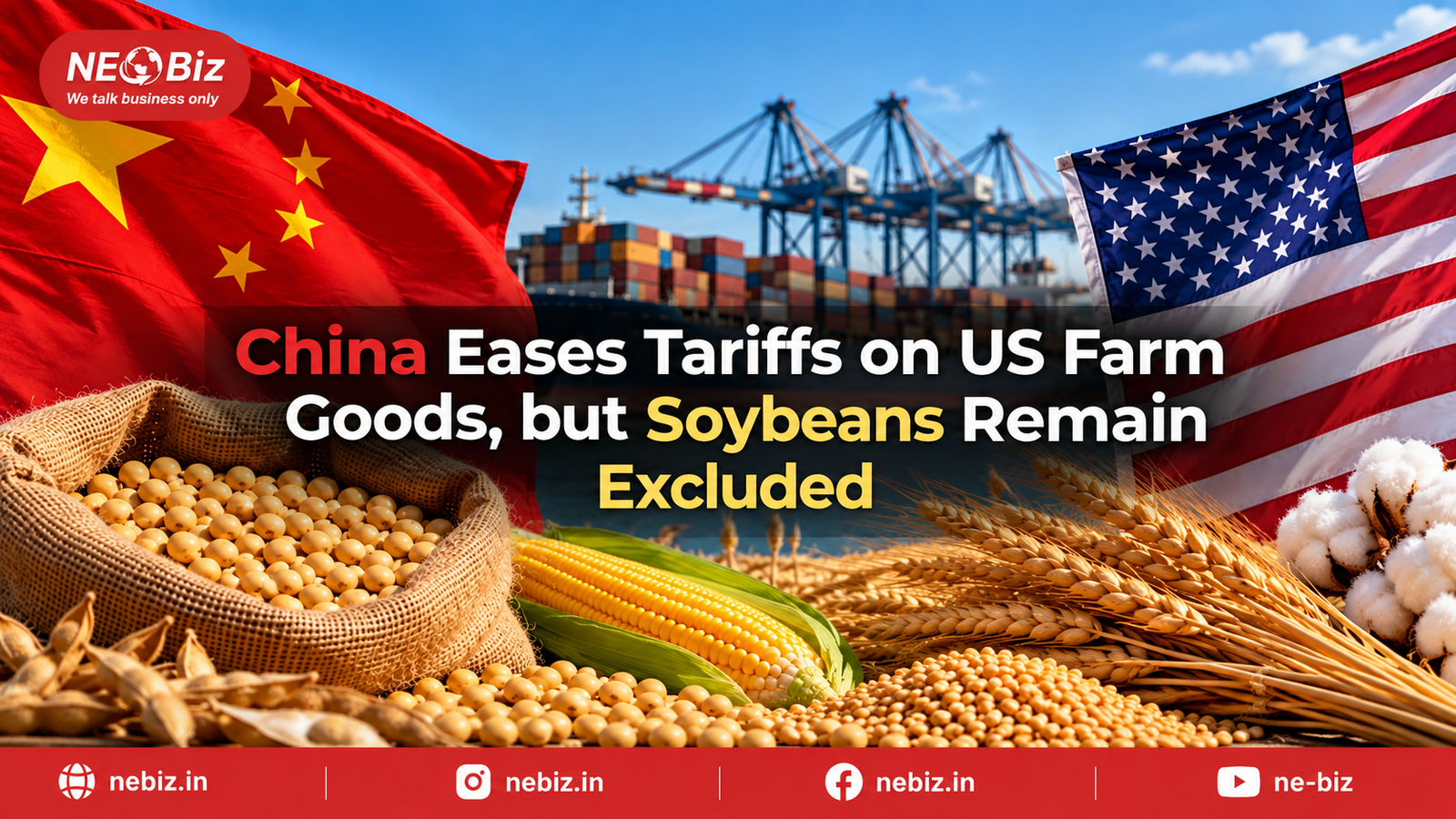
China has lowered import tariffs on several agricultural products from the United States, creating potential opportunities for American exporters while keeping whole soybeans outside the latest tariff concessions. The development comes amid ongoing efforts by the two economies to manage trade relations and address differences affecting the movement of goods across their borders. Although the tariff changes offer some relief to selected agricultural products, the continued exclusion of soybeans highlights the challenges that remain in agricultural trade between the two countries.
The decision could influence purchasing patterns among Chinese importers, particularly businesses that rely on agricultural commodities for food processing, animal feed production and other industrial applications. Import tariffs directly affect the cost of bringing goods into a country, and reductions can make certain products more competitive against supplies from alternative markets. For exporters, improved access to a major overseas market can create opportunities to expand sales, strengthen commercial partnerships and maintain demand for their products.
Agriculture plays an important role in US international trade, supporting farmers, processors, transportation companies, storage facilities and export businesses. Access to international markets is particularly important for producers who depend on overseas buyers to absorb a substantial share of their output. Changes in tariff structures can therefore affect not only the prices received by farmers but also business decisions across the wider agricultural supply chain.
Despite the tariff reductions, soybeans remain a key point of interest for agricultural traders. The crop is widely used in the production of animal feed, vegetable oil and several food products, making it an important commodity for both agricultural and manufacturing businesses. China’s demand for soybeans has significant implications for international trade flows, and changes in its import policies are closely monitored by farmers, commodity exchanges, exporters and logistics companies.
The continued exclusion of whole soybeans from the latest tariff relief means that US suppliers may still face additional costs when selling the commodity to Chinese buyers. These costs can influence the final price of imported soybeans and affect purchasing decisions, particularly when supplies are available from competing agricultural exporters. Importers may evaluate factors such as price, quality, shipping expenses, delivery schedules and tariff obligations before deciding where to source their requirements.
The distinction between whole soybeans and processed soybean products is also relevant to businesses operating across the agricultural value chain. Raw agricultural commodities and processed products can be treated differently under trade policies, resulting in varying cost structures for producers, traders and manufacturers. For companies involved in crushing soybeans to produce oil and meal, tariff arrangements can influence procurement strategies and the economics of processing operations.
The latest development could also affect broader commodity market expectations. Agricultural prices are influenced by a combination of factors, including weather conditions, crop yields, global demand, transportation costs, currency movements and government policies. Changes in tariffs introduce another variable that market participants must consider when estimating future demand and planning purchases. However, the actual market impact will depend on how importers and exporters respond to the revised trade conditions.
For American agricultural businesses, the reduction in tariffs on selected products could provide additional opportunities to compete in the Chinese market. Exporters may reassess their product portfolios, commercial agreements and distribution strategies to take advantage of the revised import conditions. At the same time, businesses dealing primarily in whole soybeans will need to account for the existing tariff structure when negotiating prices and planning shipments.
Chinese importers may also review their procurement strategies in response to the changes. Businesses could compare the cost of US agricultural products with supplies from other countries and determine whether the revised tariff arrangements make particular products more attractive. Such decisions can have consequences for shipping volumes, port activity, storage requirements and the distribution of agricultural commodities across international markets.
The development is also relevant to other agricultural exporting nations. When the cost of importing products from one country changes, buyers may reconsider their sourcing arrangements, potentially affecting competition among international suppliers. Countries exporting grains, oilseeds and other farm products will continue to monitor developments in US-China trade relations for any changes that could influence their market access or commercial opportunities.
For companies involved in international trade, the announcement reinforces the importance of keeping track of tariff schedules, trade agreements and regulatory developments. Businesses that depend on cross-border agricultural shipments must regularly evaluate changes in import costs, customs requirements and market demand to manage their supply chains effectively. Even targeted tariff adjustments can influence commercial planning when they involve major trading partners.
The broader direction of US-China trade relations will remain an important factor in determining the future of agricultural commerce between the two economies. Further negotiations, purchasing commitments and policy announcements could affect the treatment of agricultural commodities in the months ahead. Until additional changes are introduced, businesses will need to operate within the existing tariff framework and assess the commercial implications for individual product categories.
China’s latest move therefore represents a selective adjustment in agricultural trade rather than a uniform reduction in import barriers across all US farm products. While the tariff relief could support exports in certain categories, the exclusion of whole soybeans leaves an important segment of the agricultural market facing different trading conditions. Exporters, importers and commodity market participants will be watching subsequent policy developments to understand how the changes influence trade volumes, pricing and business opportunities.
The outcome will depend on the implementation of the tariff measures, the response of agricultural buyers and the broader economic relationship between the United States and China. For the global agricultural industry, the announcement serves as a reminder that trade policy decisions can shape sourcing strategies, influence commodity competitiveness and affect businesses throughout the international food supply chain.