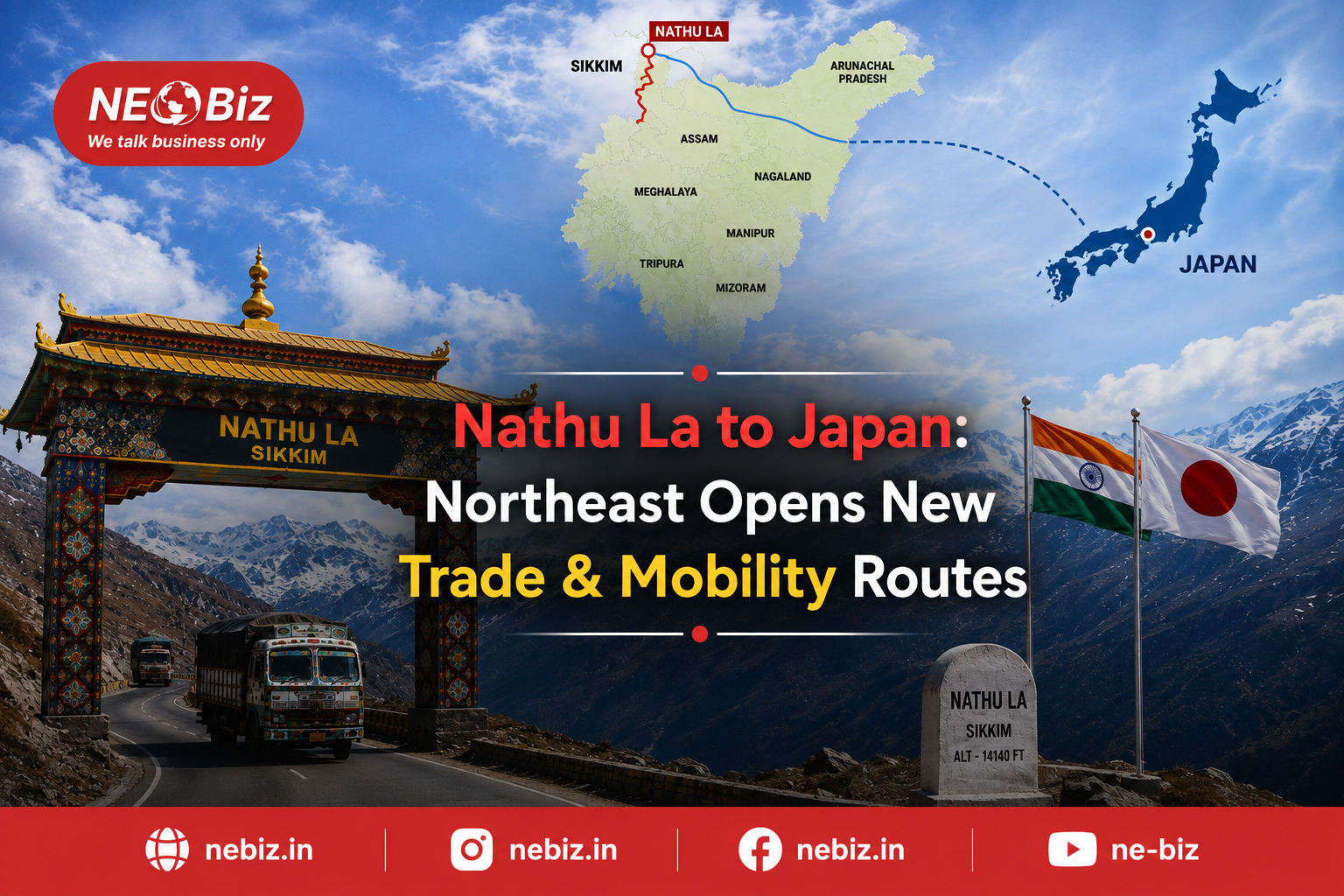
Northeast India is gaining greater significance in India’s regional connectivity and international economic engagement, driven by its strategic location, growing infrastructure and demographic strengths. The region’s proximity to Southeast and East Asia, combined with its young population, positions it as an important link for expanding trade, investment and people-to-people connections. Renewed attention on Nathu La in Sikkim is bringing the historic trade route back into focus, reinforcing the Northeast’s potential as a gateway for regional commerce and connectivity.
At the same time, expanding India–Japan cooperation is creating new opportunities for the Northeast’s workforce. With Japan facing an ageing population and persistent workforce shortages, the region’s young and increasingly skilled population presents a strong foundation for deeper labour and manufacturing partnerships. Initiatives centred on skill development, Japanese-language training, vocational education and structured employment pathways can help connect young people from the Northeast with emerging opportunities in Japan.
Beyond employment, stronger India–Japan engagement can contribute to the growth of manufacturing, skills, technology and knowledge exchange in the region. Improved mobility and workforce partnerships can also strengthen business ties while creating avenues for greater participation of the Northeast in international economic networks. Together, renewed focus on traditional trade routes such as Nathu La and stronger India–Japan cooperation place the Northeast at an important intersection of connectivity, trade, skilled workforce development and regional economic growth.