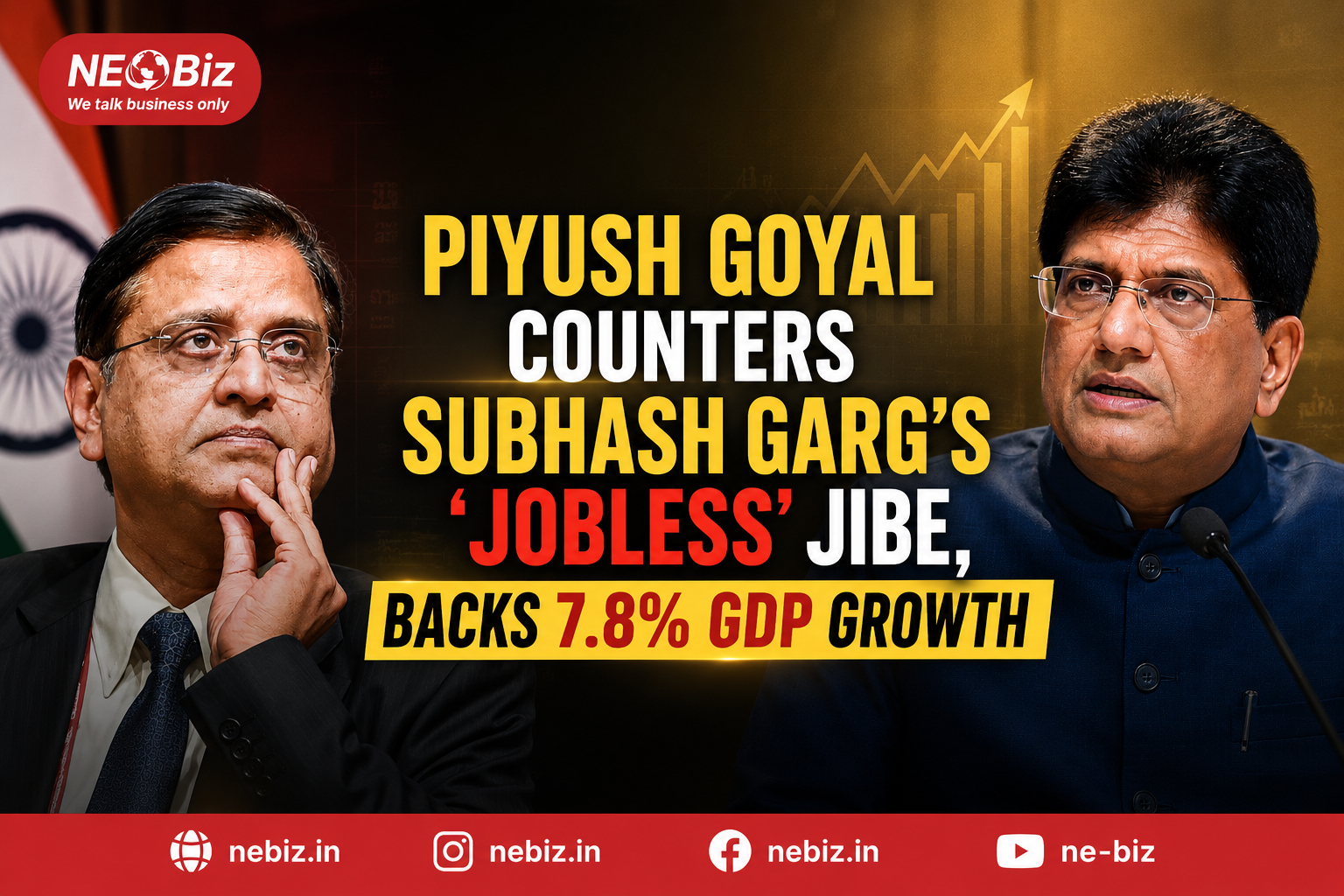
India’s 7.8% GDP growth has sparked a fresh debate over the strength and quality of the country’s economic expansion.
Commerce and Industry Minister Piyush Goyal has pushed back against criticism of India’s growth story, taking a swipe at former Chief Economic Adviser Subhash Garg over his “jobless growth” remarks. Goyal’s response comes as the government highlights the latest GDP figure as a sign of resilience and continued economic momentum.
The disagreement goes beyond a single growth number. At the heart of the debate is a larger question: Is rapid GDP growth translating into enough jobs, higher incomes and wider economic opportunities?
Supporters of the government’s position point to the pace of economic expansion as evidence that India continues to perform strongly despite global uncertainties. Critics, meanwhile, argue that headline GDP numbers need to be assessed alongside employment generation, wage growth, productivity and the distribution of economic gains.
The debate is particularly important for India as the country seeks to attract investment, expand manufacturing, strengthen domestic businesses and create employment opportunities for its growing workforce. A high-growth economy can provide a stronger foundation for businesses and investment, but sustained and inclusive growth ultimately depends on how effectively that expansion reaches households and workers.
Goyal’s comments have therefore added another layer to the ongoing discussion around GDP growth versus employment growth, putting the spotlight not only on how fast India’s economy is expanding, but also on the kind of growth the country is achieving.
With India recording 7.8% GDP growth, the numbers have certainly strengthened the government’s case on economic momentum. But the continuing debate over employment shows that the broader question of quality, inclusiveness and job creation remains firmly on the economic agenda.