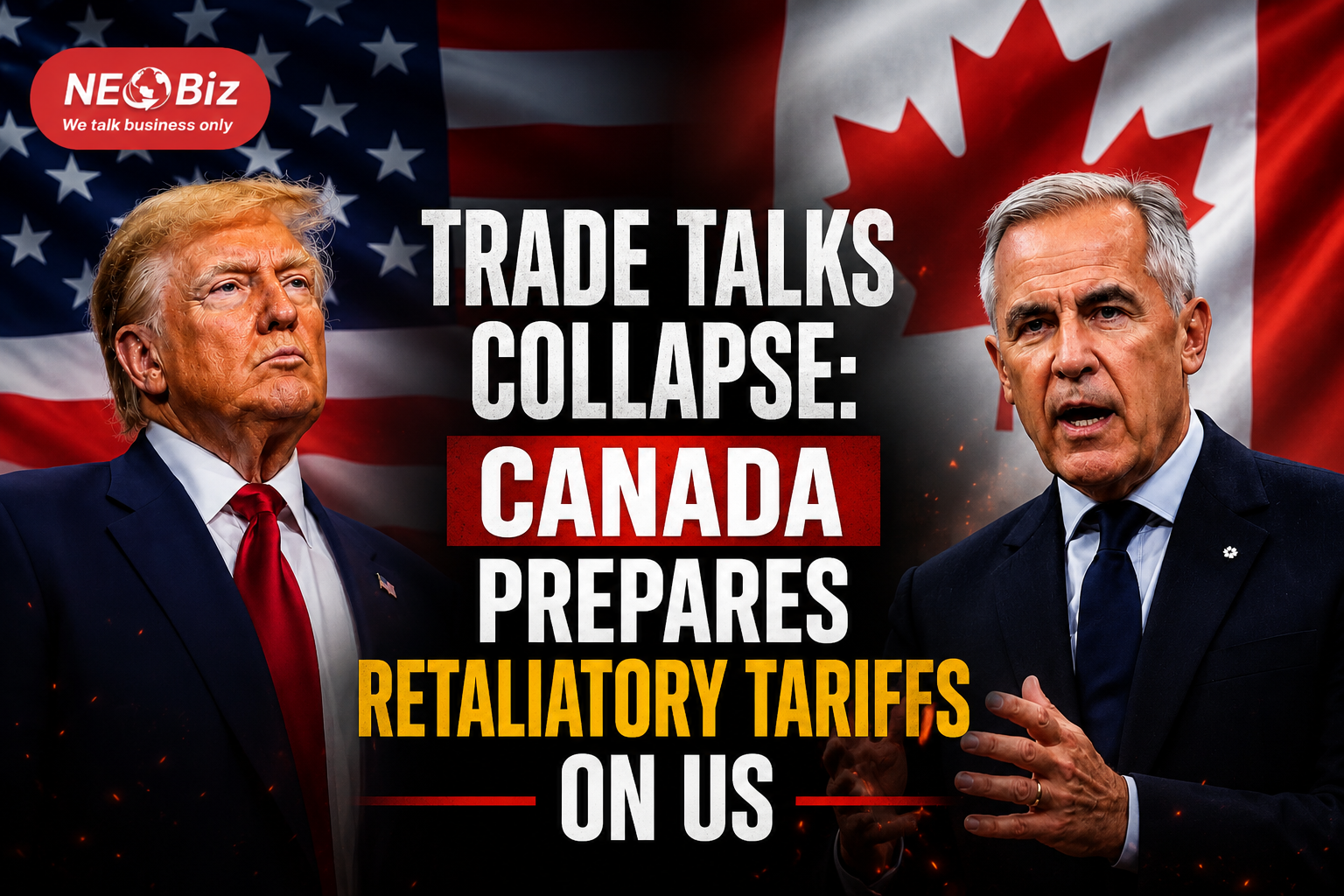
Canada and the United States are facing a fresh escalation in their trade dispute after negotiations between Washington and Ottawa broke down, pushing the two long-standing economic partners closer to a wider tariff confrontation. Canada is preparing retaliatory measures against U.S. imports, signalling that Ottawa is unwilling to accept Washington’s latest demands.
The latest tensions intensified after US President Donald Trump threatened 50% tariffs on Canadian vehicles, auto parts and steel, adding further pressure on industries that depend heavily on cross-border trade and integrated supply chains. Trump has also warned Canadian leaders to “fall in line” or face consequences.
Canadian Prime Minister Mark Carney has taken a firm position, arguing that Ottawa cannot accept a trade arrangement that treats Canada as subordinate to the United States or puts major Canadian industries at risk. He has accused Washington’s proposals of potentially damaging key sectors including automobiles, steel and aluminium.
The dispute could have consequences well beyond tariffs. The US and Canada have deeply interconnected economies, particularly in automobiles, manufacturing, energy, agriculture and metals. Any prolonged tariff battle could raise costs, disrupt supply chains and create uncertainty for businesses and workers on both sides of the border.
Canada has indicated that its response will focus on protecting Canadian businesses and workers, while Ottawa also looks to diversify its trading relationships and reduce its dependence on the US market. With negotiations now stalled and both governments adopting a tougher stance, the latest confrontation could mark another significant shift in one of the world’s most important bilateral trading relationships.