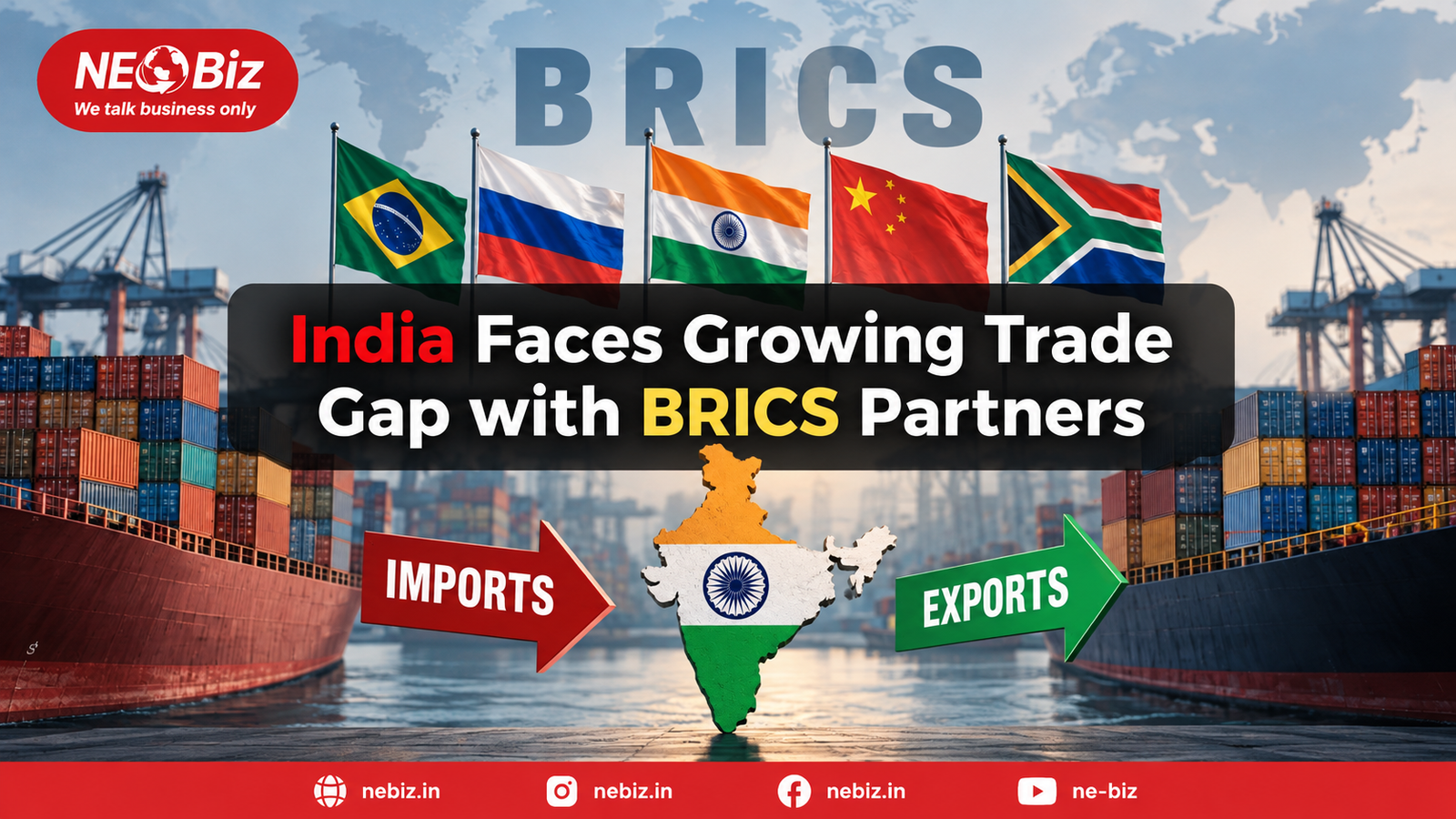
India’s trade with the BRICS grouping has increasingly become an import-driven story, with the country’s trade deficit with its BRICS partners widening significantly. According to the latest trade data, India imported $321.8 billion worth of goods from its 10 BRICS partners in FY26, while exports stood at around $95.7 billion, resulting in a trade deficit of approximately $226.1 billion.
The figures highlight the significant imbalance in India’s trade relationship with the expanded BRICS bloc. While the grouping provides Indian businesses with access to some of the world’s largest and fastest-growing markets, the gap between imports and exports indicates that India continues to source considerably more goods from these economies than it sells to them.
A large share of the deficit is concentrated among a few major trading partners. China, Russia and the UAE together accounted for roughly 84 per cent of India’s BRICS trade deficit, underscoring the importance of these markets in India’s overall trade equation with the grouping.
China remains a particularly important factor in India’s import dependence, with substantial volumes of manufactured goods, electronics, machinery, components and other industrial products entering the Indian market. Russia is another major source of imports, particularly due to energy-related trade, while the UAE serves as a significant regional trading and re-export hub.
The widening deficit comes at a time when BRICS is becoming an increasingly important platform for emerging economies. The expansion of the grouping has increased its economic and commercial significance, giving India opportunities to strengthen trade ties, attract investment and expand the market for Indian products.
However, the large trade gap also highlights the need for India to improve its export competitiveness. Increasing exports of manufactured products, engineering goods, pharmaceuticals, technology-driven products, agricultural commodities and other value-added goods could help Indian businesses capture a larger share of BRICS markets.
For India, the challenge is not simply to increase the volume of trade but to create a more balanced trade relationship. Expanding domestic manufacturing, strengthening supply chains, improving product quality and supporting exporters could help reduce import dependence while opening new opportunities for Indian companies overseas.
The growing BRICS trade deficit therefore presents both a challenge and an opportunity. As global trade patterns continue to evolve, India’s ability to convert its growing engagement with BRICS into stronger export growth will be crucial for improving its position in international commerce.